
The short answer
When a water heater stops producing hot water, the cause is usually a pilot or ignition problem on a gas unit, a tripped breaker or failed heating element on an electric unit, a thermostat that has been turned down, heavy sediment in the tank, or a tank that is reaching the end of its life. A homeowner can safely check the power supply, the thermostat setting and whether the pilot is lit, but anything involving gas components, wiring or a leaking tank should go to a qualified technician.
The right next step depends on the symptom. No hot water at all points to a different problem than hot water that runs out quickly, and both are different from water that is only lukewarm. The sections below walk through each one, so that if you do book hot water heater repair, you can describe exactly what is happening.
Safety first
Before checking anything, a few rules apply to every water heater:
- If you smell gas, stop. Do not light anything, operate switches or try to relight a pilot. Leave the house and call your natural gas utility's emergency line or 911 from outside.
- If the tank is leaking from the body, not a fitting, turn off the fuel or power and the cold water supply to the heater, and call for service. A leaking tank cannot be repaired.
- Do not remove covers on an electric heater unless the breaker is off. Elements and thermostats run on 240 volts.
- Follow the label on the unit. Most tanks have lighting and operating instructions printed on the jacket. If yours does not, or the instructions are unclear, leave it to a technician.
No hot water at all: gas water heaters
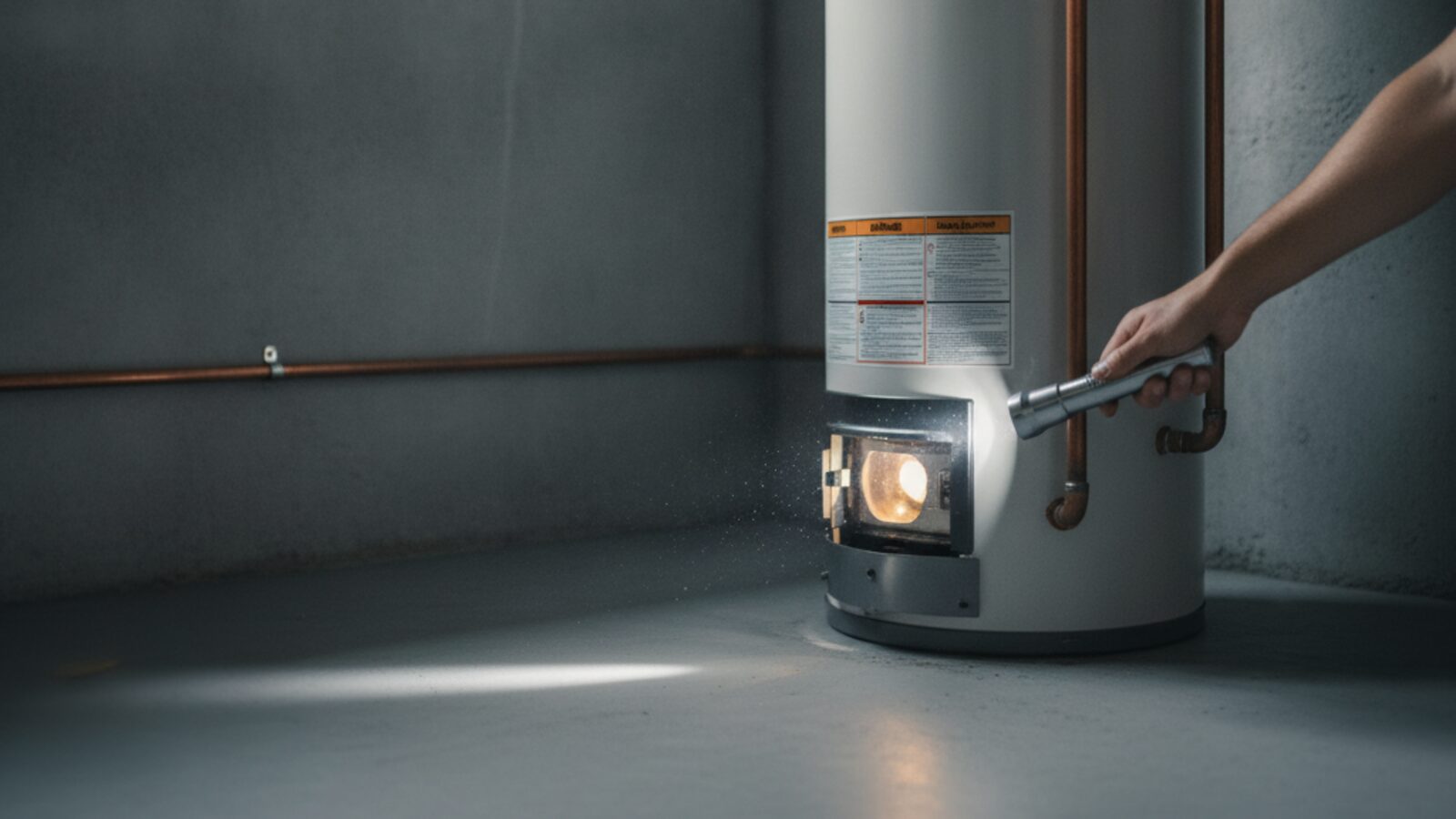
On a gas tank, a complete loss of hot water usually means the burner is not firing. Common reasons include:
- The pilot has gone out. Many older tanks have a standing pilot that can be blown out by a draft or a brief gas interruption. Look through the small viewing window near the bottom of the tank. If there is no small blue flame, the pilot is out.
- The thermocouple or flame sensor has failed. This safety device shuts off gas when it does not detect a flame. A pilot that lights but will not stay lit after you release the control knob is a classic sign of a failing thermocouple.
- The gas control valve is off or faulty. Check that the control is set to "On" and not "Pilot" or "Vacation".
- The venting has a problem. Power-vented and high-efficiency units have safety switches that stop the burner if the vent is blocked. In a Chestermere winter, frost or drifting snow over an outside vent termination can trigger this.
If the pilot is out and the label gives relighting instructions, relighting once is reasonable. If it goes out again, will not light, or you are not comfortable doing it, that is a repair call. Repeated pilot outages are a symptom, not the problem.
No hot water at all: electric water heaters
Electric tanks have no flame, so the checks are different:
- Check the breaker panel. A tripped double-pole breaker is the simplest cause. If it trips again after you reset it, stop and call for service, because something in the heater is drawing too much current.
- The high-limit switch may have tripped. Most electric heaters have a reset button behind the upper access panel. It trips when the water overheats, which usually means a thermostat or element has failed. With the breaker off, pressing it may restore heat, but a reset that keeps tripping needs a technician.
- An element may have burned out. Most residential electric tanks have two elements. If the upper one fails, you may get no hot water at all. If only the lower one fails, you get a small amount of hot water that runs out fast.
Element and thermostat testing involves live-voltage checks with a meter. That work belongs with a licensed technician.
Hot water that runs out quickly
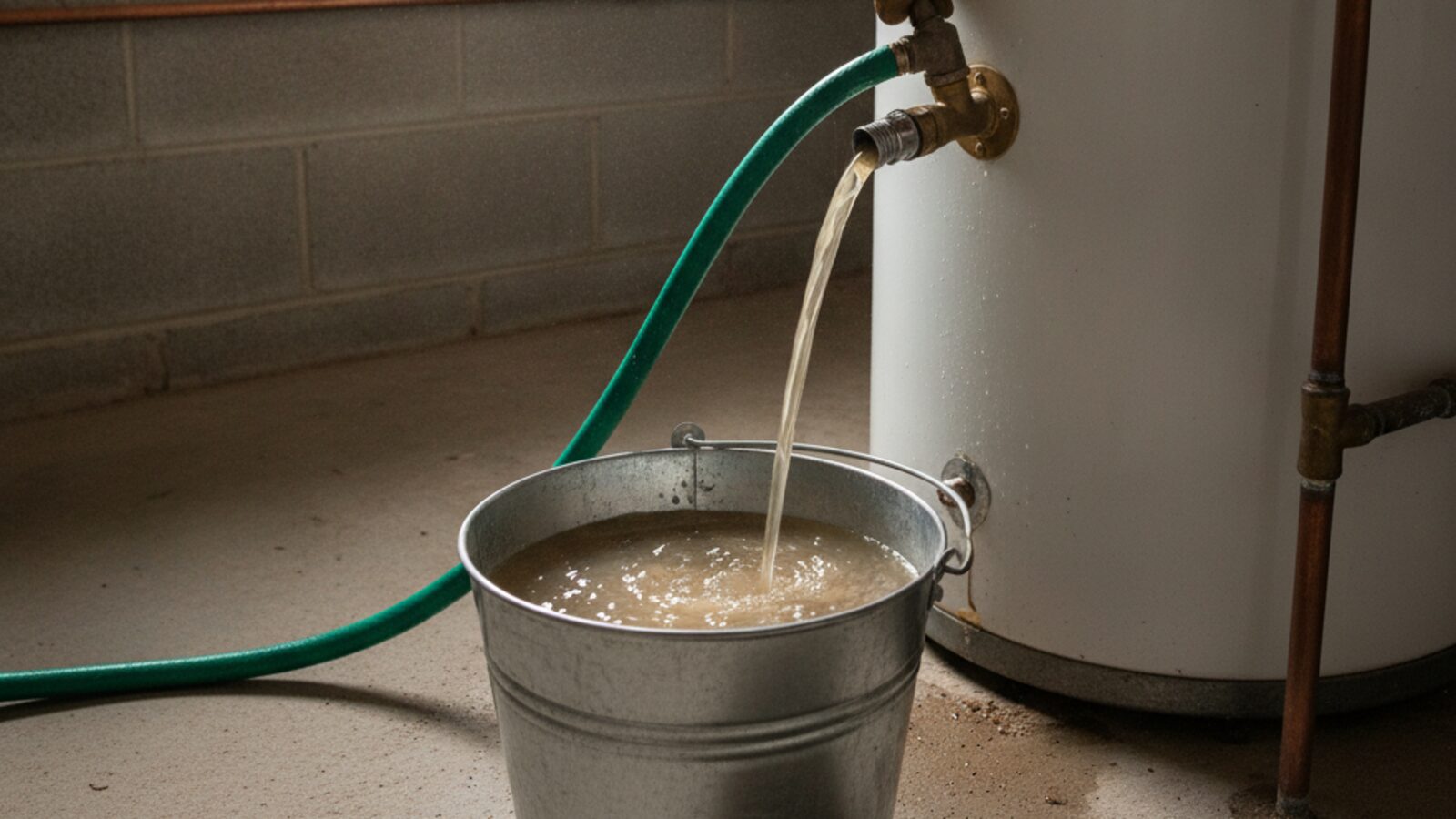
If the water starts hot but turns cold sooner than it used to, the tank is producing less usable hot water than before. The usual causes are:
- Sediment build-up. Chestermere receives its drinking water from the City of Calgary as a regional water customer, and the City reports hardness as calcium carbonate of 141 to 274 mg/L. Hard water leaves minerals that settle at the bottom of the tank. Heavy sediment insulates the water from the burner, takes up volume and often causes rumbling or popping sounds.
- A failed lower element on an electric heater, as described above.
- A broken dip tube. This tube carries incoming cold water to the bottom of the tank. If it cracks, cold water mixes into the hot water near the top, so the supply turns lukewarm quickly.
- Higher demand than the tank was sized for. A new bathroom, a larger soaker tub or more people in the house can simply outgrow the tank.
Periodic flushing, following the manufacturer's instructions, helps control sediment. If a tank has not been flushed for years, flushing can stir up debris that blocks the drain valve, so it is worth having a technician assess an older, noisy tank before you attempt it.
Lukewarm water and the thermostat setting
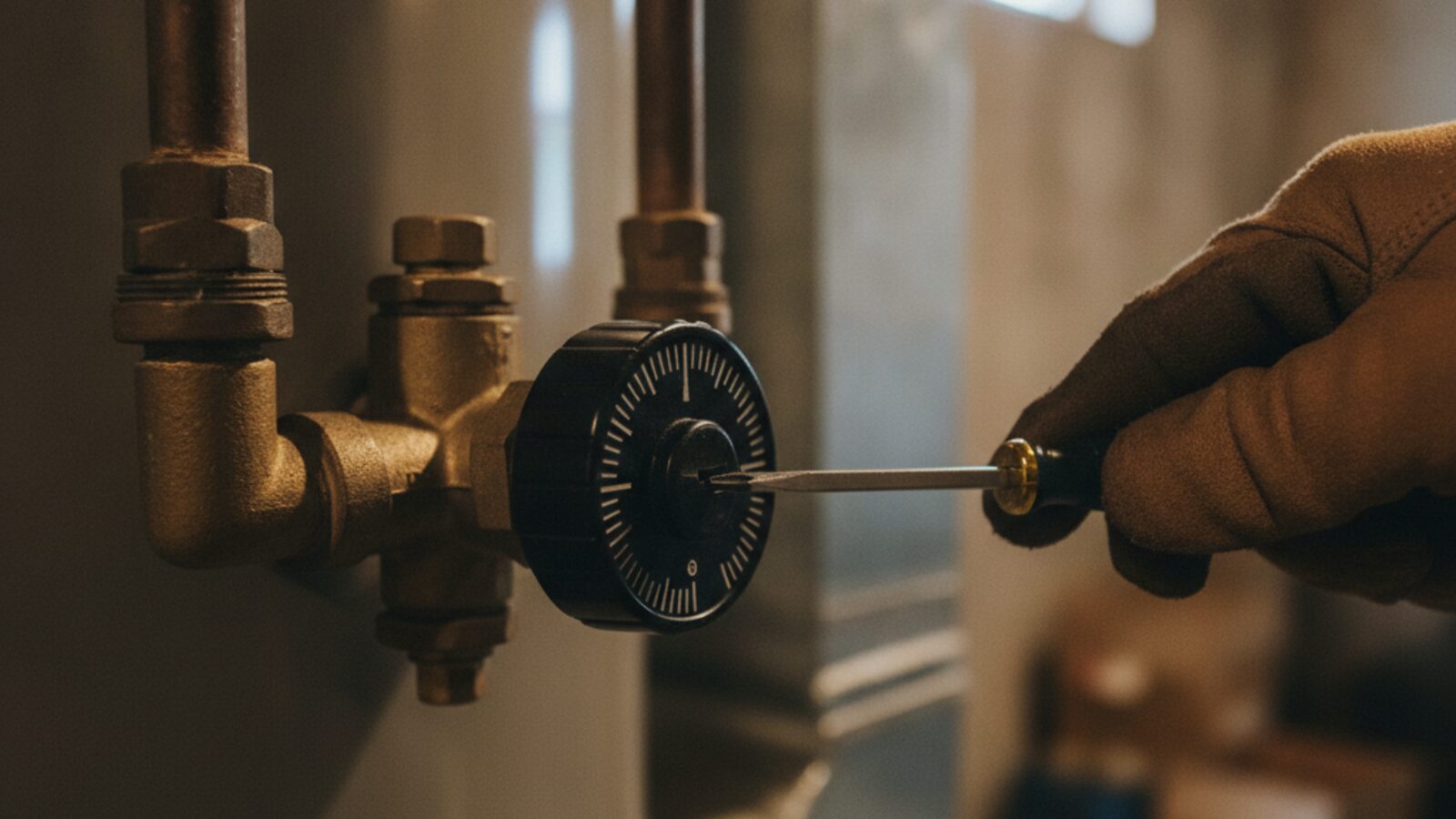
Sometimes the heater is working, but the setting is too low. A dial may have been turned to "Vacation" and never reset, or turned down to save energy.
The temperature setting is a balance between two safety concerns. Parachute, Canada's national injury-prevention charity, advises that hot water at your taps should be no hotter than 49 °C (120 °F) to prevent scalds. It also warns against lowering the heater's thermostat below 49 °C, because bacteria that cause Legionnaires' disease grow best below that temperature. For electric water heaters, Parachute advises not setting the temperature below 60 °C.
So do not just turn the dial down to fix a scald risk, or up to fix lukewarm water. A technician can check that the thermostat reads accurately and discuss options such as a mixing valve, which keeps the tank hot while delivering safer water at the tap.
Signs the tank itself is failing
Some problems point past a repair and toward replacement:
- Water pooling under the tank, or rust-coloured streaks on the jacket
- Rusty or discoloured hot water, while the cold water stays clear
- Loud, persistent rumbling that continues after flushing
- A tank that is well into its expected service life and needs repeated repairs
Replacement is not automatic. A failed igniter, thermocouple or element is a routine repair on a tank that is otherwise sound. If the tank itself is corroding or leaking, though, repairing components will not fix it. Our guide to choosing between a tank and a tankless water heater covers the options if you reach that point.
What to tell the technician
A clear description saves time on the visit. Before you call, note:
- Whether the heater is gas or electric, and roughly how old it is (the date is often in the serial number on the label)
- The exact symptom: no hot water, hot water that runs out, lukewarm water, noise, or a leak
- When it started, and whether anything changed around then, such as a power outage, cold snap, or renovation
- What you have already checked, such as the breaker, pilot or thermostat setting
Book a water heater repair in Chestermere
Infinite Heating is a licensed and insured team serving Chestermere and nearby communities since 2022. We diagnose gas and electric tank water heaters, including ignition and pilot faults, thermostats, elements, venting safety switches and sediment problems, and explain whether a repair or a replacement makes more sense for your home.
Learn more about hot water heater repair in Chestermere, or contact us with your heater type, its age and the symptom you are seeing.
This general information does not replace an on-site assessment by a qualified professional or the manufacturer's instructions for your water heater.