The short answer
A water heater making popping or rumbling noises almost always has sediment built up at the bottom of the tank, which is common in Chestermere because the water is hard. Hissing, screeching, loud banging or a relief valve that keeps discharging are different: those point to a valve, pressure or burner problem that should be looked at by a technician.
Most tank noises are not an emergency, but they are information. The sound tells you roughly what is happening inside the tank, and catching it early is usually the difference between a repair and a replacement. This guide goes through each sound, what causes it, and what to do about it. If you would rather have someone listen to it in person, our hot water heater repair in Chestermere service starts with finding the cause and telling you plainly whether it needs fixing.
Why Chestermere tanks get noisy
Chestermere gets its drinking water from the City of Calgary as a regional water customer, and the City's 2025 water quality data shows hardness of 141 to 274 mg/L as calcium carbonate. That is hard water.
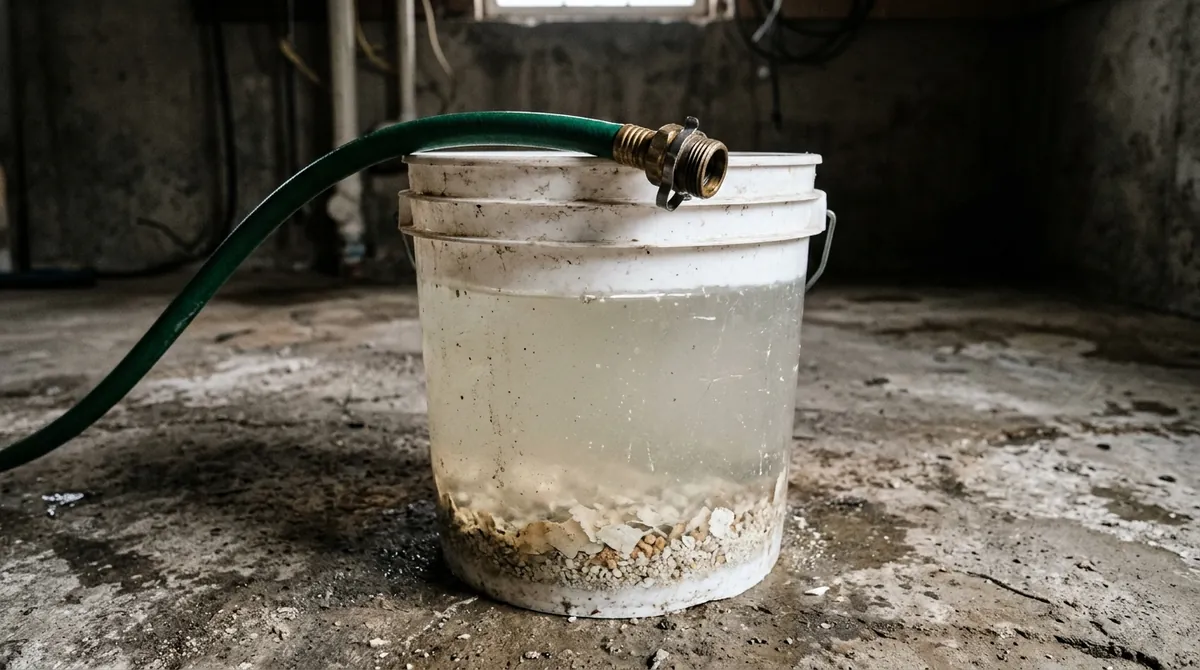
When it is heated, some of the dissolved minerals come out of solution and settle on the bottom of the tank as a layer of scale and sediment.
On a gas water heater, the burner heats the tank from underneath. Water trapped under the sediment layer overheats, turns to steam and bubbles up through it. Each bubble makes a pop. On an electric tank, scale builds up on the heating elements and makes them crackle or sizzle. So the most common water heater noise in Chestermere is not a fault in the usual sense. It is a sign the tank has not been flushed for a while, or that it is getting old.
What each sound means
Popping or rumbling
What it sounds like: popcorn popping, or a low rumble or knocking from the bottom of the tank while the burner is on.
What causes it: sediment on the bottom of the tank, as described above. The louder and more constant it gets, the thicker the layer usually is.
Why it matters: sediment makes the tank work harder to heat the same water, so it takes longer to recover after showers. Over years it also makes the bottom of the tank run hotter, which adds wear to the steel and the lining. A tank that rumbles loudly and is also running out of hot water early is telling you the sediment layer is taking up real space.
What to do: a tank flush, following the manufacturer's instructions, removes loose sediment. On a tank that has been flushed regularly, that is often all it needs. On an older tank that has never been flushed, be careful: opening a drain valve that has sat closed for years can stir up debris that blocks the valve or stops it from closing again. That is a reasonable point to have a technician do the first flush.
Crackling or sizzling
What it sounds like: a crackle, sizzle or hiss that comes and goes while the tank is heating.
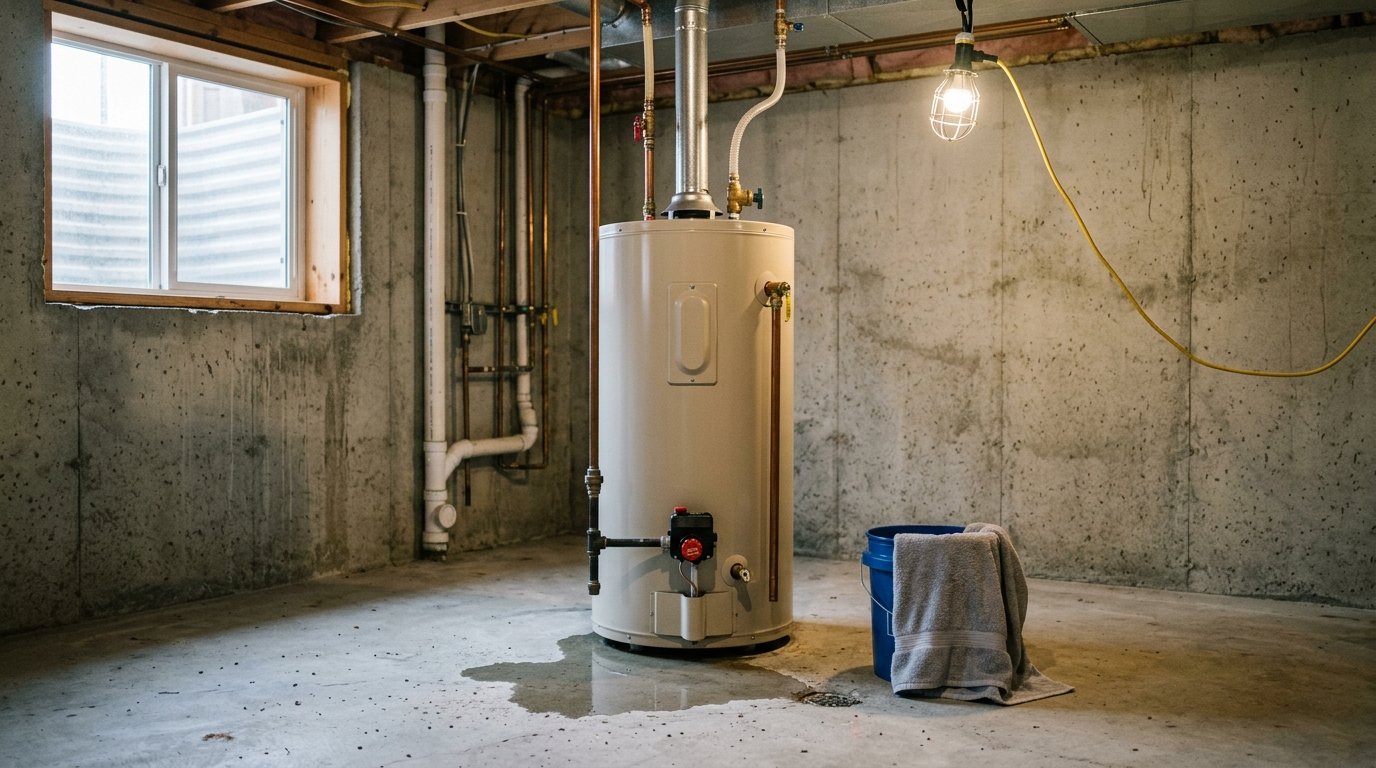
What causes it on a gas tank: usually condensation dripping onto the burner. It is common when a full tank of cold water starts heating after heavy use, and it should fade once the tank is up to temperature. If it does not fade, or if there is water under the tank, check for a leak. Our guide on what to do when a water heater is leaking explains how to tell condensation from a real leak.
What causes it on an electric tank: scale on the heating elements. The water boils in small pockets against the scale. Elements that crackle loudly are working harder than they should, and a scaled element is more likely to fail.
Hissing or a steady whistle
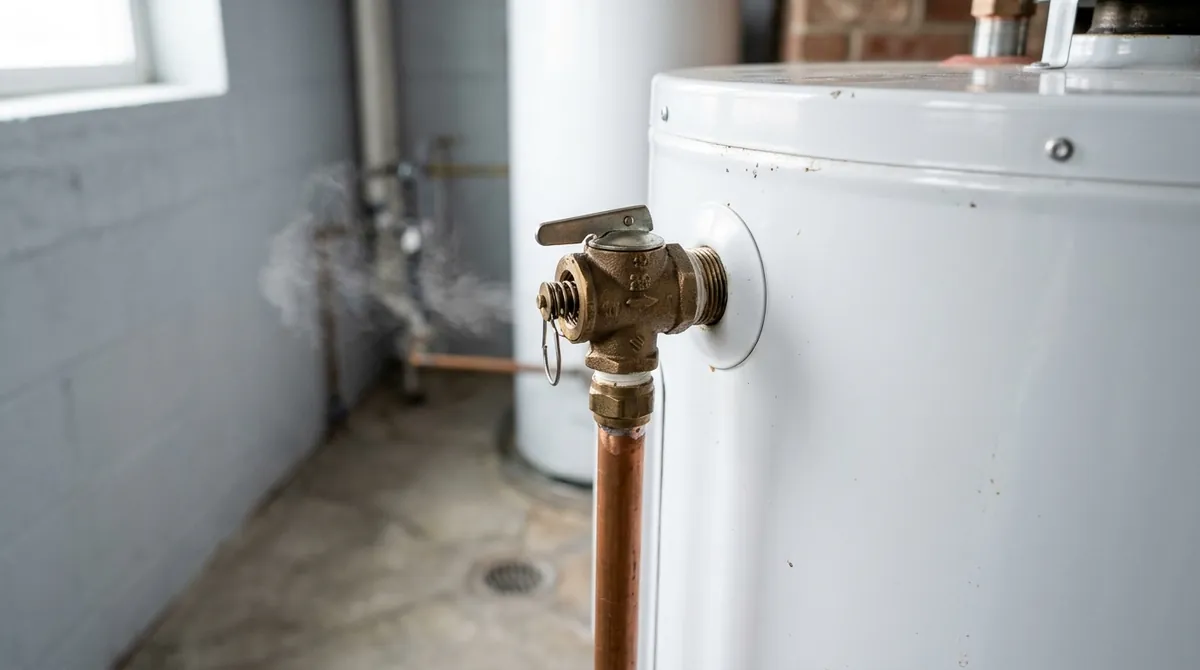
What it sounds like: a continuous hiss or whistle, sometimes with water dripping from the discharge pipe that runs down the side of the tank.
What causes it: most often the temperature and pressure (T&P) relief valve opening, or a valve or fitting that is partly open or leaking. The T&P valve opens when the temperature or pressure in the tank gets too high. It can also hiss when it is worn and no longer seals.
What to do: treat this one seriously. A relief valve that discharges regularly means the valve is worn, the household water pressure is too high, or the water is overheating because of a thermostat or control fault. Never cap or plug the discharge pipe, and do not keep opening the valve to test it, because the water can be hot enough to scald. Turn the tank's gas control to "Pilot" or switch off its breaker, and book a repair visit.
Ticking or tapping
What it sounds like: light ticking in the pipes above the tank, especially as hot water starts flowing or as the tank heats.
What causes it: metal pipes expanding and contracting as hot water moves through them, or a heat trap fitting on top of the tank. It is usually harmless. If it becomes loud or new, a technician can check the fittings and how the pipes are strapped.
Screeching or screaming
What it sounds like: a high-pitched squeal or scream, usually when a tap is opened.
What causes it: water forced through a narrow opening, most often a partly closed shut-off valve on the cold supply or a valve that is worn inside. Check that the cold water shut-off above the tank is fully open. If it is and the noise continues, the valve likely needs replacing.
Banging when taps close
What it sounds like: a loud bang in the pipes when someone closes a tap quickly or the washing machine finishes filling.
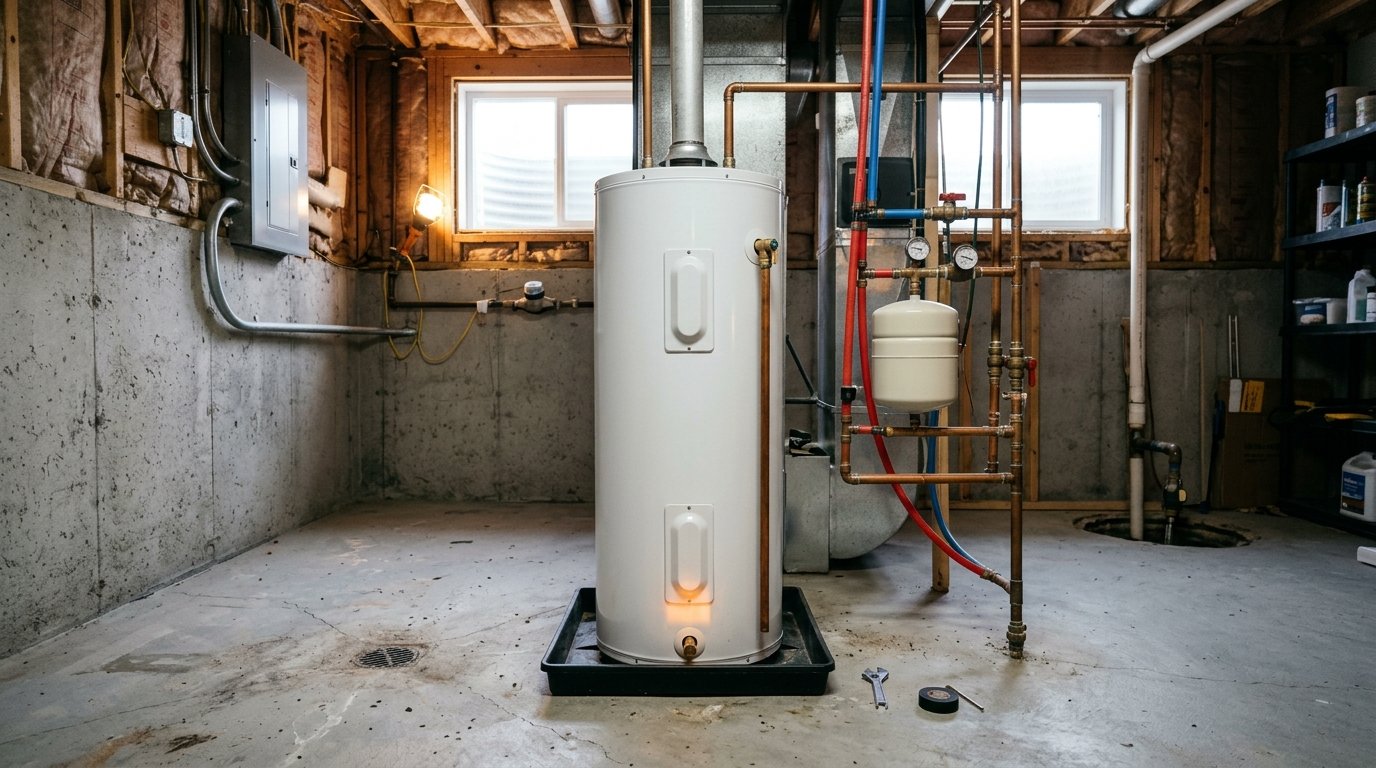
What causes it: water hammer, a pressure surge when moving water stops suddenly. It is not the water heater itself, but repeated pressure spikes add strain to the tank and its relief valve. In homes with high water pressure or a closed plumbing system, thermal expansion can add to it, and an expansion tank or pressure reducing valve may be part of the fix.
Sounds you should not wait on
Most of the sounds above can wait for a booked visit. A few cannot:
- You smell gas. Do not touch switches or try to relight anything. Leave the house and call ATCO's emergency line or 911 from outside.
- The relief valve is discharging hot water or steam continuously. Turn off the gas or power to the tank and close the cold supply valve.
- Loud, violent banging from inside the tank itself, not the pipes, especially with very hot water at the taps. Turn off the gas or power and call for service.
- Noise plus water around the base, rust streaks on the jacket or rusty hot water. That combination often means the tank itself is failing.
Repair or replace a noisy tank?
A noisy tank is not automatically a tank that needs replacing. Many causes are straightforward repairs:
- Flushing a tank with moderate sediment
- Replacing a worn T&P relief valve, drain valve or shut-off valve
- Replacing a scaled electric element or a faulty thermostat or gas control
- Adding an expansion tank or adjusting household water pressure
Replacement starts to make more sense when the noise is one symptom among several: the tank is near the end of its expected life, it rumbles loudly even after a flush, it runs out of hot water much sooner than it used to, or there are signs of rust or leaking from the tank body. Sediment that has been baking on the bottom for years can be too hard to flush out at all. When that is the situation, our hot water heater replacement in Chestermere service can size a new tank or a tankless unit to your home.
Our posts on hot water tank replacement cost and tank vs tankless water heaters cover that decision.
How to keep a tank quiet in hard water
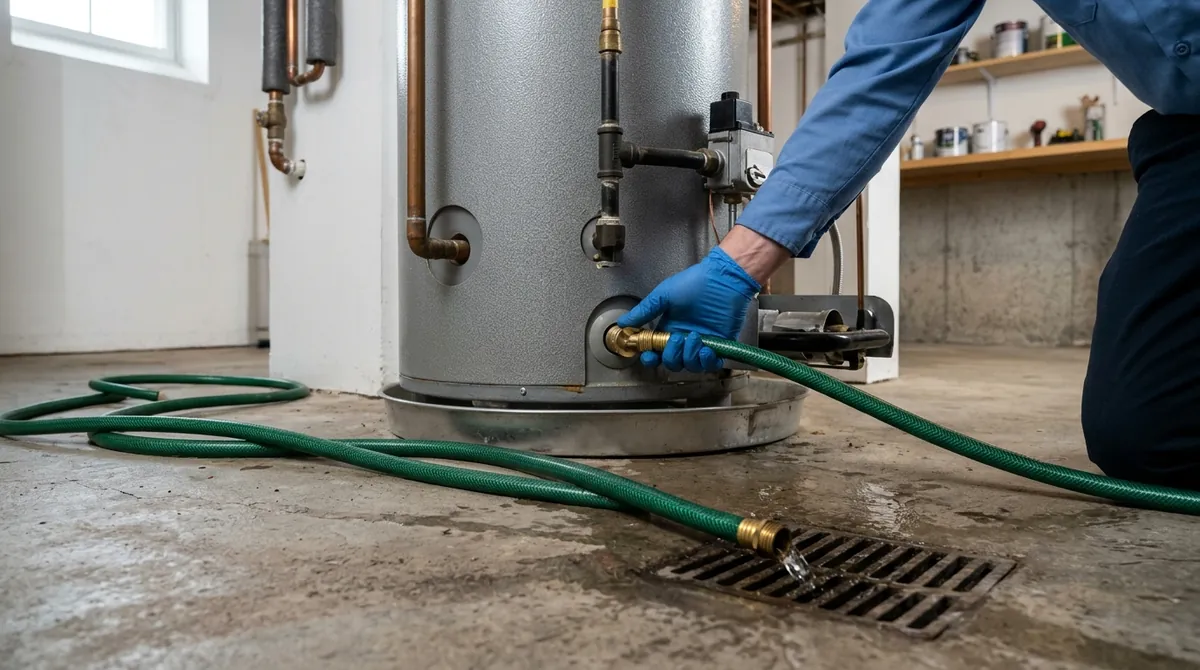
- Flush the tank on a schedule. Follow the manufacturer's instructions for how often. In hard water, once a year is a common starting point, and a tank that has been flushed from the start is far easier to keep clean.
- Keep the temperature sensible. Water that is hotter than it needs to be drops more minerals and puts more pressure on the relief valve.
- Have the anode rod checked on an older tank. It protects the steel lining, and in hard water it is worth knowing its condition before it is used up.
- Watch the relief valve pipe. Water at the end of that pipe is an early warning, and it is much cheaper to deal with before the valve fails completely.
Get a noisy water heater checked
Infinite Heating is a licensed and insured HVAC team based in Chestermere, serving Chestermere, Calgary, Airdrie, Strathmore and Okotoks since 2022. We listen to what the tank is doing, find the cause, and tell you plainly whether it needs a flush, a part or a new tank before any work begins.
Book hot water heater repair in Chestermere, contact us, or call +1 403 899 3420.