The short answer
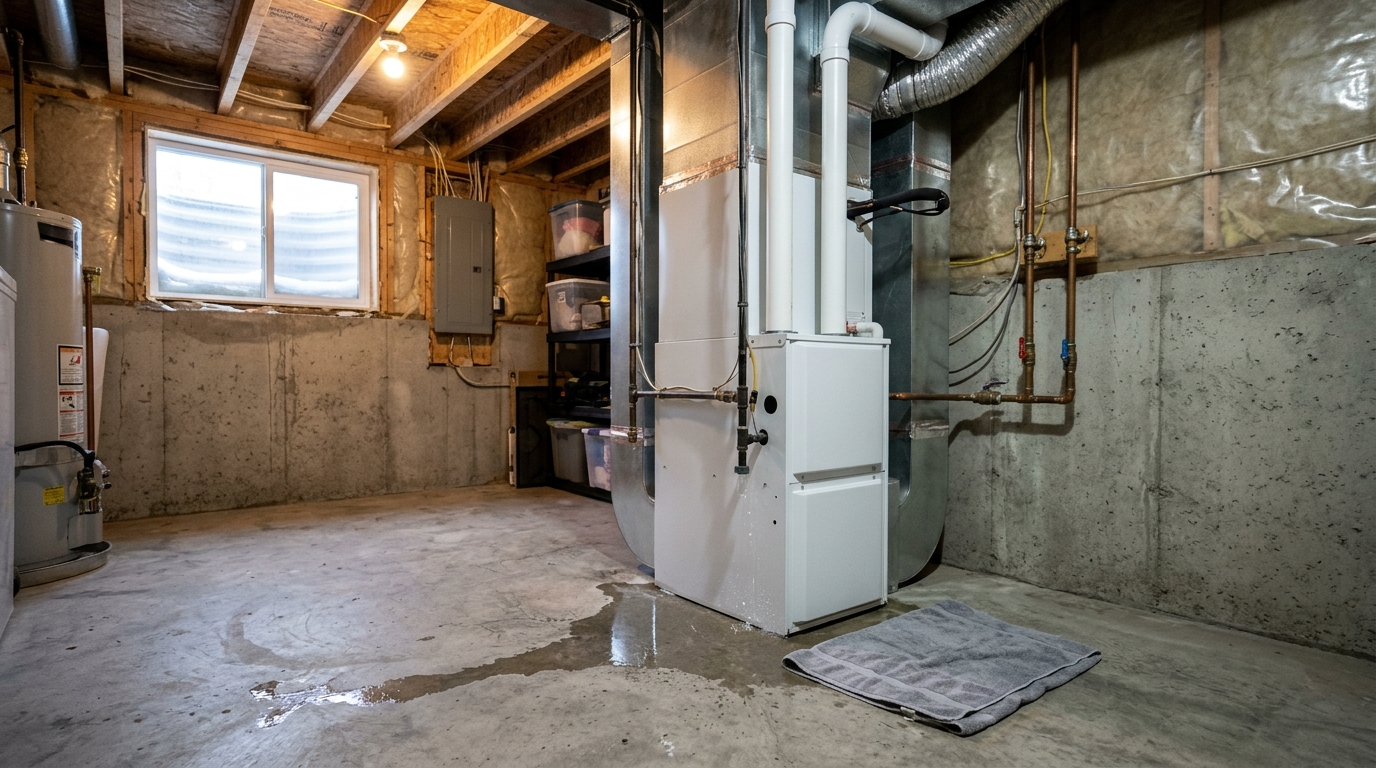
A furnace leaking water in a Chestermere home is almost always a high-efficiency furnace with a condensate problem: the trap is clogged, the drain line is blocked or frozen, the condensate pump has failed, or a fitting has cracked. It is rarely a sign that the furnace itself is finished, but it does need attention soon, because the water can damage the furnace's electronics and the floor around it, and many furnaces shut themselves off when the drain backs up.
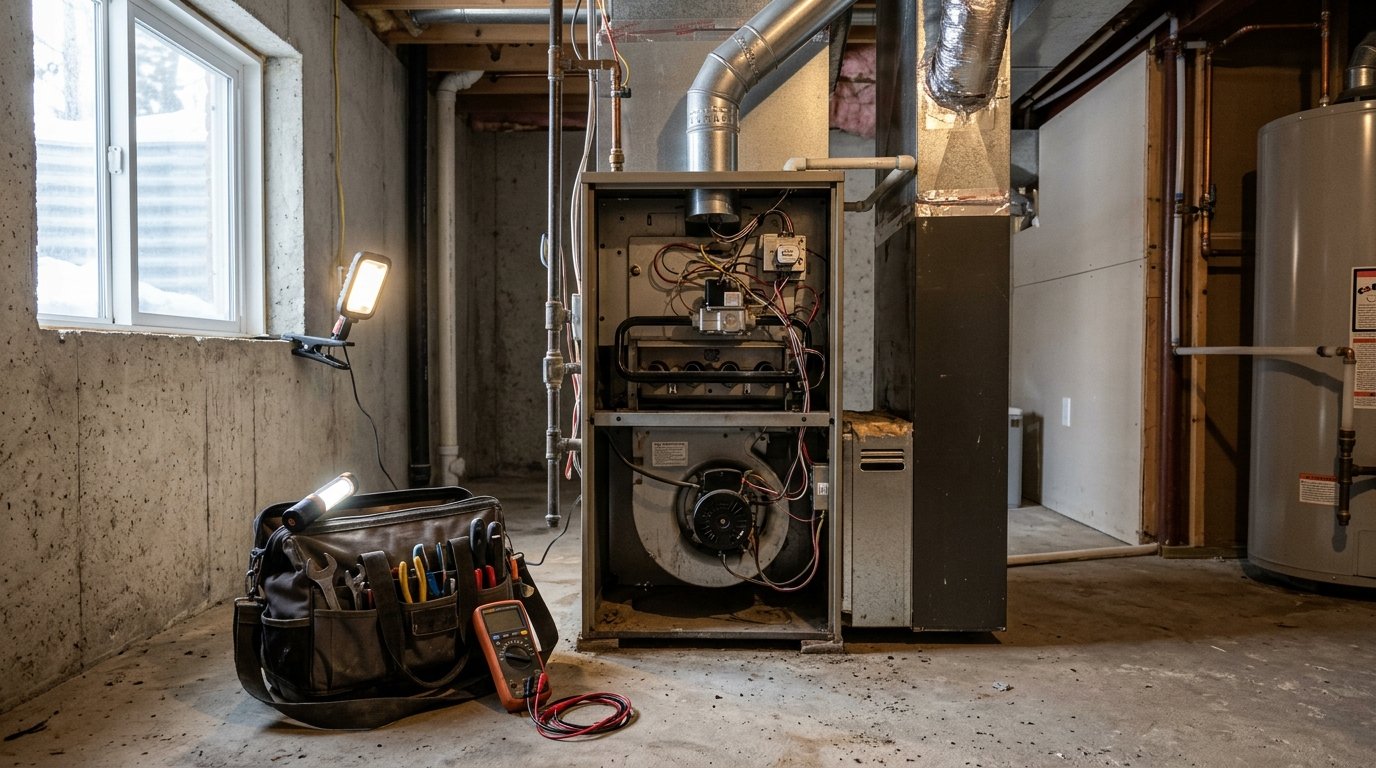
This guide explains where the water comes from, the common causes in order of how often we see them, what you can safely check yourself, and when it is time to book furnace repair in Chestermere. If the furnace has already stopped heating, skip ahead to the section on what to do right now.
Why a high-efficiency furnace makes water at all
Most furnaces installed in Chestermere and Calgary homes over the last twenty years are condensing furnaces, the kind with white plastic intake and exhaust pipes running out through the side or the roof of the house instead of a metal chimney. They make water as a normal part of how they work.
Natural Resources Canada's Heating With Gas guide explains it plainly: in the condensing heat exchange section, combustion gases are cooled until the water vapour condenses, which releases extra heat into the furnace, and the condensate is piped to a floor drain or condensate pump. The same guide notes that condensing furnaces have AFUE ratings of between 90 and 98 percent, which is why almost every furnace sold today is this type.
So a high-efficiency furnace is supposed to produce water. On a cold day it can produce a surprising amount. What it is not supposed to do is put that water on the floor. When you see a puddle, something between the heat exchanger and the drain has stopped working.
Older mid-efficiency furnaces with a metal flue do not normally make condensate. If you have one of those and there is water underneath it, the water is almost certainly coming from something else: the air conditioner coil sitting on top of the furnace, a humidifier, or a plumbing leak nearby.
The common causes of a furnace leaking water
1. A clogged condensate trap
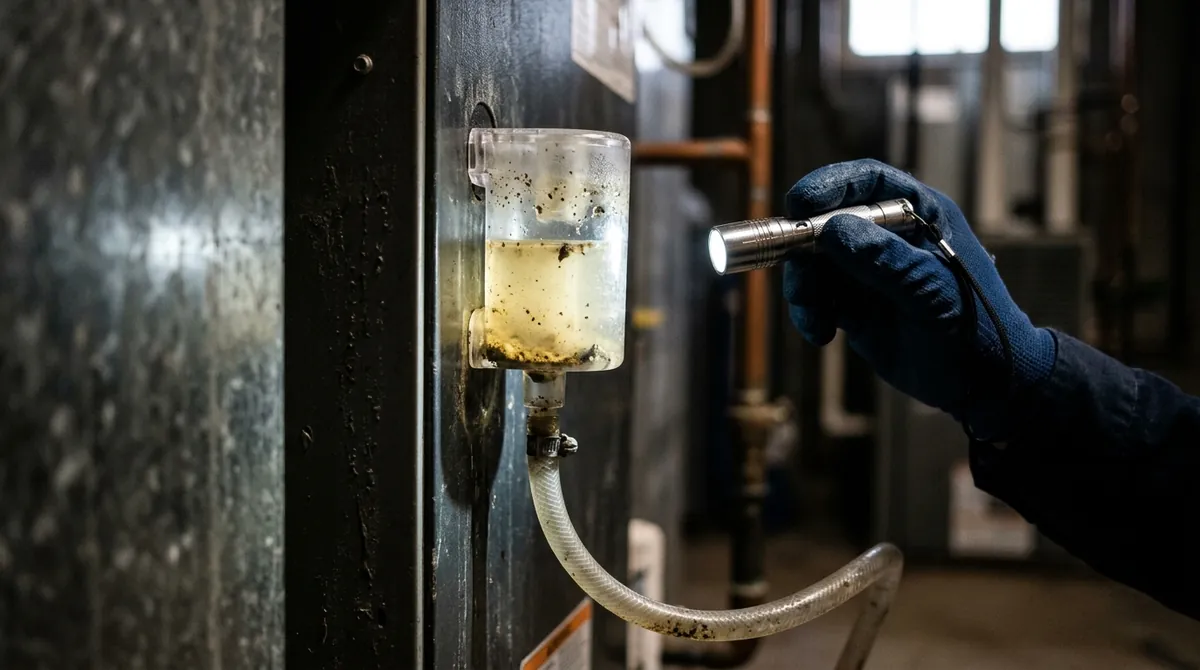
The condensate trap is a small plastic fitting, usually on the side of the furnace, that holds a little water to stop exhaust gases escaping through the drain. Over a season or two it collects sludge, rust flakes and debris from the heat exchanger. Once it clogs, water backs up into the furnace and finds its own way out, usually under the cabinet.
This is the cause we see most often, and it is one of the reasons a tune-up includes clearing the trap. A clogged trap also commonly trips the furnace's pressure switch, so the furnace may start, run for a moment and shut down again. Our guide on what a furnace tune-up includes covers the condensate checks in more detail.
2. A blocked or kinked drain line
The tubing that carries condensate from the trap to the floor drain or pump can sag, kink behind the furnace, or fill with the same sludge that clogs the trap. If the line has been moved during a basement renovation or pushed against a wall, it may not drain downhill at all any more.
3. A frozen drain line or a frozen exhaust pipe
This one is particular to our winters. If any part of the condensate line runs through an unheated space, along a cold exterior wall, or out of the house, it can freeze during a cold snap. The water then has nowhere to go.
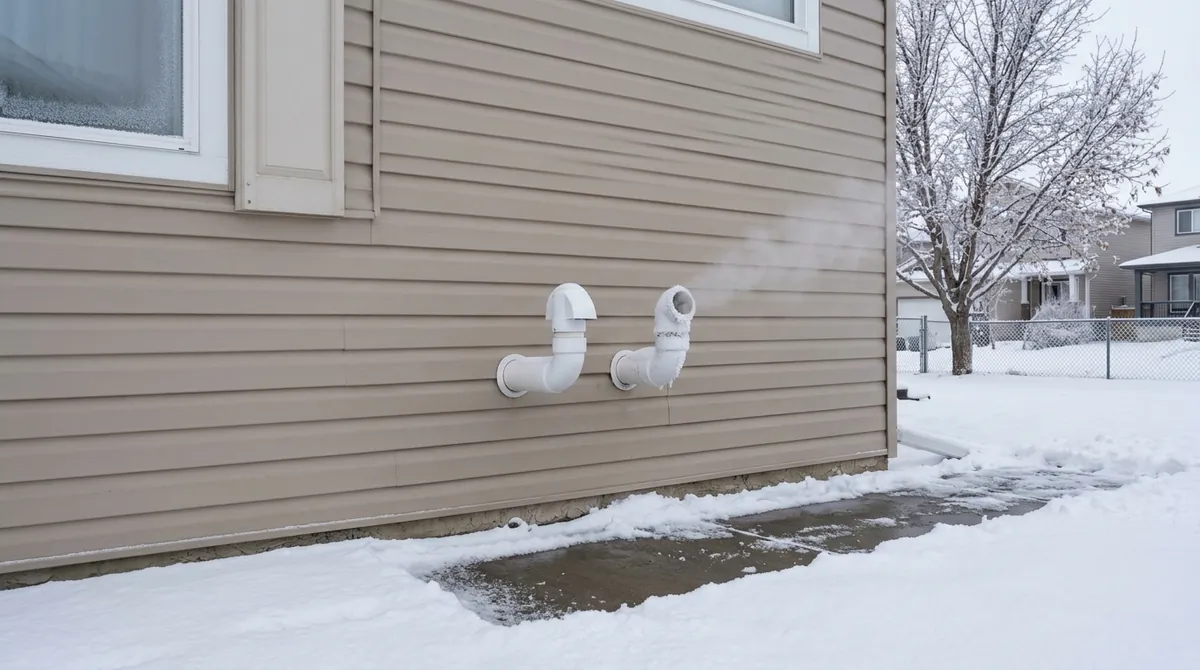
The exhaust pipe can cause a related problem. Condensate also forms inside the white plastic exhaust pipe, and that water is meant to run back down to the furnace and out through the trap. If the pipe has lost its slope, or if ice builds up at the outside termination during a deep freeze, the water pools in the pipe and can drip out of a joint instead. After a heavy snowfall, check that the intake and exhaust pipes on the outside wall are not buried or iced over.
4. A failed condensate pump
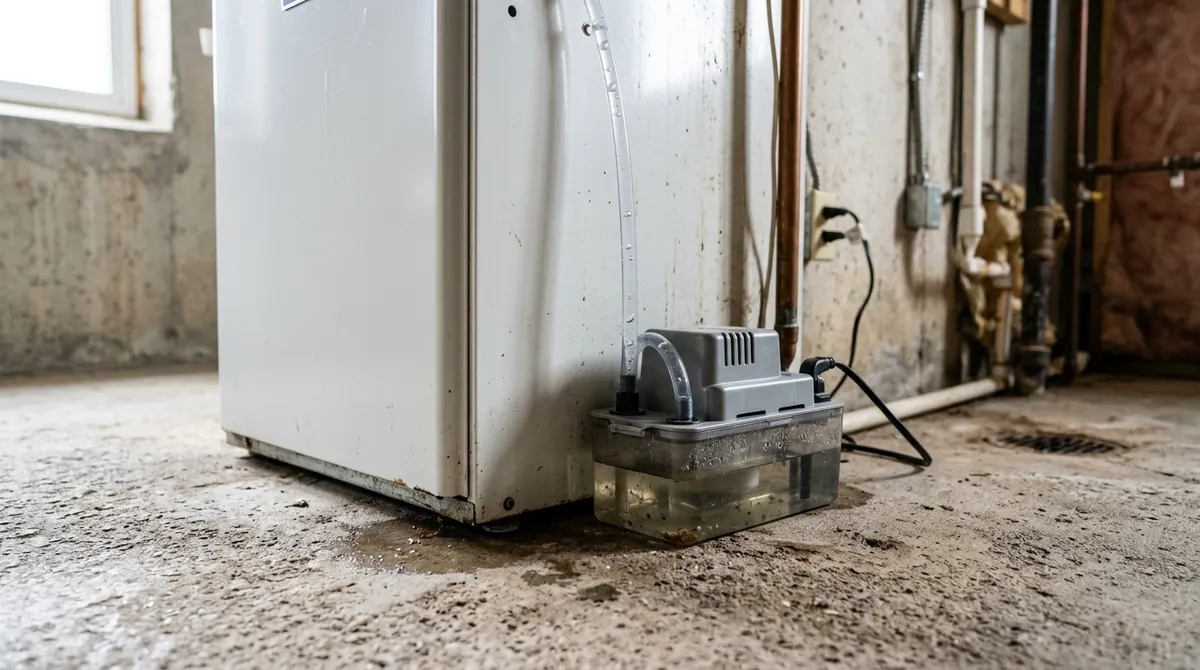
If there is no floor drain close to the furnace, the condensate runs into a small pump with a reservoir, which lifts the water up and over to a drain or laundry sink. Pumps fail. The float sticks, the motor burns out, or the outlet tube clogs. When that happens the reservoir overflows onto the floor.
A pump that hums but never empties, or a reservoir that is full to the brim, points straight at the pump. Many pumps have a safety switch wired to shut the furnace off when the reservoir is full, so a failed pump can also mean no heat.
5. A cracked fitting or a loose connection
Plastic fittings at the trap, the drain connections and the joints in the vent pipe can crack or work loose over time, especially on furnaces that were moved or worked on. The leak is often small and steady, and it may only show up while the furnace is running.
6. The water is not coming from the furnace at all
Water around the furnace is not always the furnace's fault. The usual other sources are:
- The air conditioner coil. The indoor coil of a central air conditioner sits on top of the furnace. It makes condensate in summer, and if its drain pan is cracked or its line is blocked, water can run down into or around the furnace. In winter the AC is off, so this is less likely in November, but leftover water from a blocked pan can still show up.
- A furnace humidifier. If your furnace has a humidifier mounted on the ductwork, a stuck water valve or a blocked drain line on the humidifier can leak. NRCan's guide also points out that a well-sealed house often does not need a humidifier at all, and that heavy condensation on windows is a sign of too much humidity.
- A plumbing leak or the hot water tank. In many Chestermere basements the furnace and hot water tank sit side by side. If the water is closer to the tank, our guide to a water heater leaking will help you tell the difference.
What you can safely check yourself
Before you call, a few checks can help narrow it down. None of them involves opening the furnace's burner compartment or touching gas or electrical parts.
- Find where the water is coming from. Dry the floor with a towel and watch for a few minutes while the furnace runs. Note whether the water appears at the side of the cabinet near the trap, at the back, under the AC coil, at a pump, or from a pipe joint above.
- Look at the condensate pump, if you have one. Is the reservoir full? Is the pump running? Is the outlet tube kinked?
- Follow the drain line. Check that it runs downhill all the way to the drain and is not pinched behind the furnace or pushed against a cold wall.
- Check the outside vent pipes. Make sure the intake and exhaust terminations are clear of snow and ice.
- Check the filter. A badly clogged filter does not cause leaks by itself, but it is worth changing while you are there.
If the leak is from the pump and the reservoir is simply full because the tube is kinked, straightening the tube may be all it needs. Anything beyond that is a job for a technician, because the trap and drain connections are part of the furnace's venting and safety system. A trap that is reassembled without its water seal, or a drain connected the wrong way, can let exhaust gases into the house.
What to do right now
If water is leaking but the furnace is still heating, put down towels or a shallow pan, keep the area around the furnace clear, and book a repair visit in the next few days. A slow leak left for weeks can rust the cabinet floor, damage the control board or blower motor below the trap, and ruin flooring or drywall.
If the furnace has stopped heating, switch it off at the thermostat, keep the leak contained, and call for service. In a Chestermere winter a house cools quickly, so protect your pipes: open cabinet doors under sinks on outside walls, and use safe portable electric heaters if you need them. Our guide on what to do when your furnace stops working walks through the checks that are safe to do while you wait.
When it is a safety problem, not a leak. If you smell gas, leave the house without touching switches and call ATCO's emergency line or 911 from outside. If a carbon monoxide alarm goes off, or anyone feels dizzy, sick or unusually tired, get everyone out and call 911. Water dripping from a vent pipe joint can mean the joint is not sealed, so a leak from the exhaust pipe should be treated as urgent and checked as soon as possible.
What the repair usually involves
Most condensate leaks are straightforward to fix once the cause is found. Depending on what the technician finds, the repair is usually one of these:
- Removing, cleaning and refilling the condensate trap, then flushing the drain line
- Re-routing or re-sloping a drain line, or insulating a section that runs along a cold wall
- Replacing a failed condensate pump or its float switch
- Replacing a cracked trap, fitting or drain connection
- Re-sloping or re-supporting the exhaust pipe so condensate runs back to the furnace, and clearing ice at the termination
- Testing the pressure switch and safety controls once the drain is clear, so the furnace starts and runs normally
The visit also tells you whether the water has already done damage. Water dripping onto the control board, the inducer motor or the blower motor can cause problems that show up weeks later, so it is worth having those checked while the cabinet is open. For a sense of what moves the price of this kind of visit, see our guide to furnace repair cost in Chestermere.
How to stop it happening again
Condensate problems are among the easiest furnace problems to prevent:
- Book a yearly tune-up before the heating season. Clearing the trap and flushing the drain line is part of a proper furnace maintenance visit, and it is the single best way to avoid a mid-winter leak.
- Keep the drain path clear. Do not box the furnace in so tightly during a renovation that the drain line has to bend, and keep storage away from the pump.
- Clear the outside pipes after every snowfall. Drifts against the side of the house in Chestermere can bury intake and exhaust pipes overnight.
- Watch the pump. If you have one, look at it once a month in winter. A pump that is struggling usually gets louder or runs more often before it fails.
Is a leaking furnace a sign it needs replacing?
Usually not. A clogged trap or a failed pump on a ten-year-old furnace is a repair, not a reason to replace it. The time to think about replacement is when the leak has already damaged major parts of an old furnace, or when the leak is coming from the heat exchanger area itself on a furnace that is well into its second decade. Our guide to the signs you need a furnace replacement covers that decision in more detail.
Get a furnace leak fixed in Chestermere
Infinite Heating is a licensed and insured HVAC team based in Chestermere, serving Chestermere, Calgary, Airdrie, Strathmore and Okotoks since 2022. When your furnace is leaking, we find where the water is coming from, tell you plainly what it will take to fix, and give you a clear price before any work begins. Emergency furnace repair is available 24/7, and furnace repairs carry a one-year parts and labour warranty.
Book furnace repair in Chestermere, contact us, or call +1 403 899 3420.