
The short answer
To prepare a central air conditioner for winter in Chestermere, turn the thermostat's cooling mode off, clear leaves and debris from around the outdoor unit, follow your manufacturer's guidance on the outdoor power supply and any cover, and keep the shared furnace filter clean. Then book the air conditioner's maintenance visit for spring, before the first hot stretch, so any problem is found while there is still time to fix it.
Most of this is simple, safe homeowner work. The rest of this guide explains each step, where the common mistakes are, and what should be left to a technician. When you are ready to book, our air conditioner maintenance service covers the checks described below.
Why end-of-season care matters in Alberta
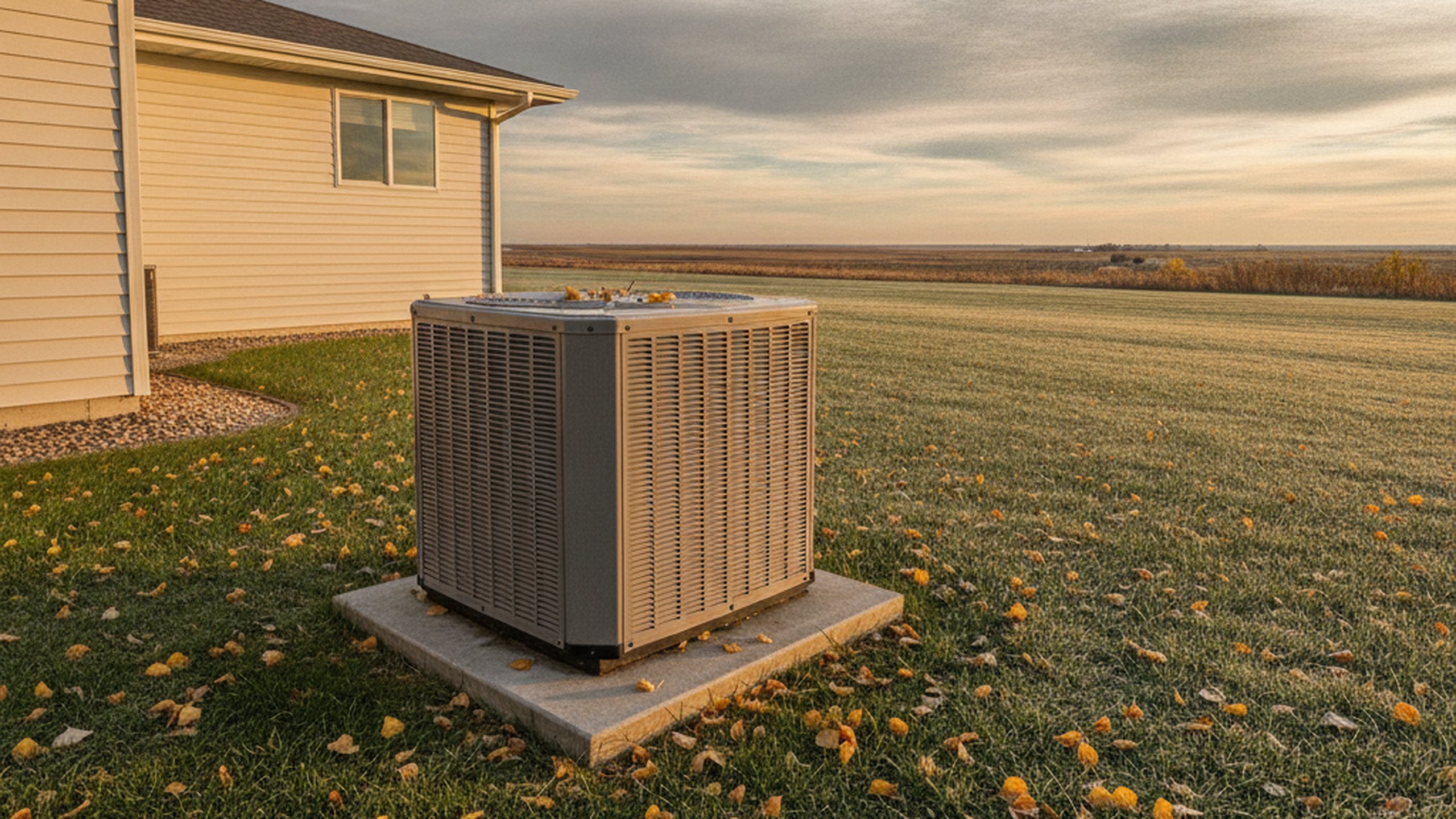
A central air conditioner spends most of the year idle outdoors. In Chestermere that means months of snow, freeze-thaw cycles, blowing debris off open fields, and occasional chinooks that melt and refreeze whatever has collected on the unit. None of that damages a sound, correctly installed condenser on its own, but leaves packed against the coil, ice sitting in the base, or a blocked condensate drain indoors can all become next summer's service call.
It also helps to remember that your air conditioner is not a separate system. In most Chestermere homes, the indoor coil sits on top of the furnace and uses the same blower, ductwork and filter. What you do to the furnace side over the winter affects the cooling side next year.
Step 1: Switch off cooling at the thermostat
Once overnight temperatures drop and you no longer need cooling, set the thermostat to heat or off for cooling. That prevents the outdoor unit from being called on during a warm fall afternoon when it is cold outside overnight. Running an air conditioner in low outdoor temperatures is not what most residential systems are designed for.
If you have a smart thermostat with automatic changeover, check that it will not switch into cooling on its own during a mild spell.
Step 2: Clear the outdoor unit
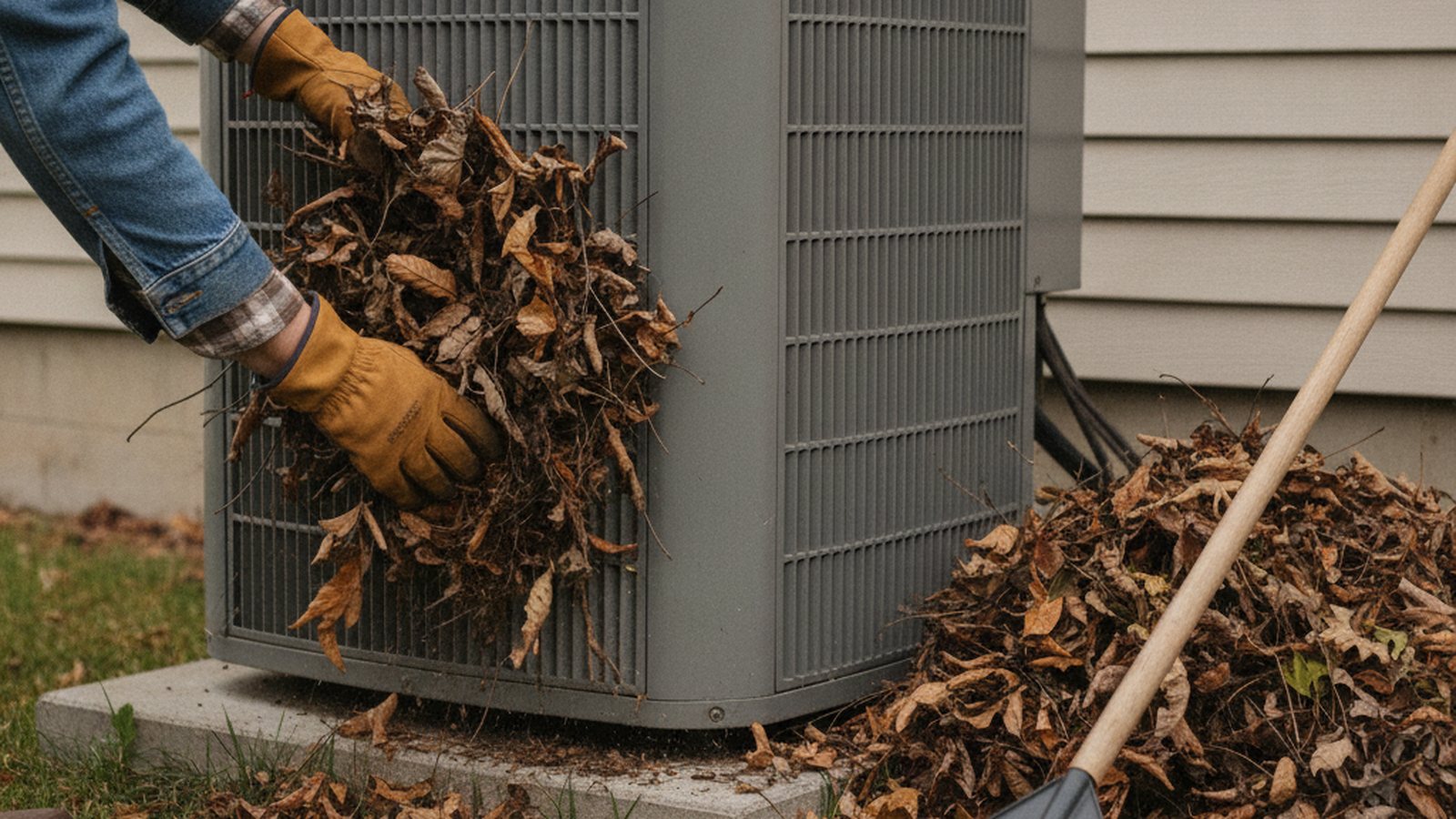
Walk around the outdoor unit and remove leaves, grass clippings, seed fluff and twigs from the top, the sides and the base. Pull debris away by hand or with a soft brush, working with the fins rather than across them, since the thin aluminum fins bend easily. Trim back plants and shrubs so air can move freely around the unit next season.
Do not use a pressure washer, and do not open the cabinet or reach inside the fan area. Natural Resources Canada notes that filter and coil maintenance can have a dramatic impact on system performance and service life, and that more involved work such as checking refrigerant or making electrical adjustments belongs with a competent service contractor.
Step 3: The outdoor power supply
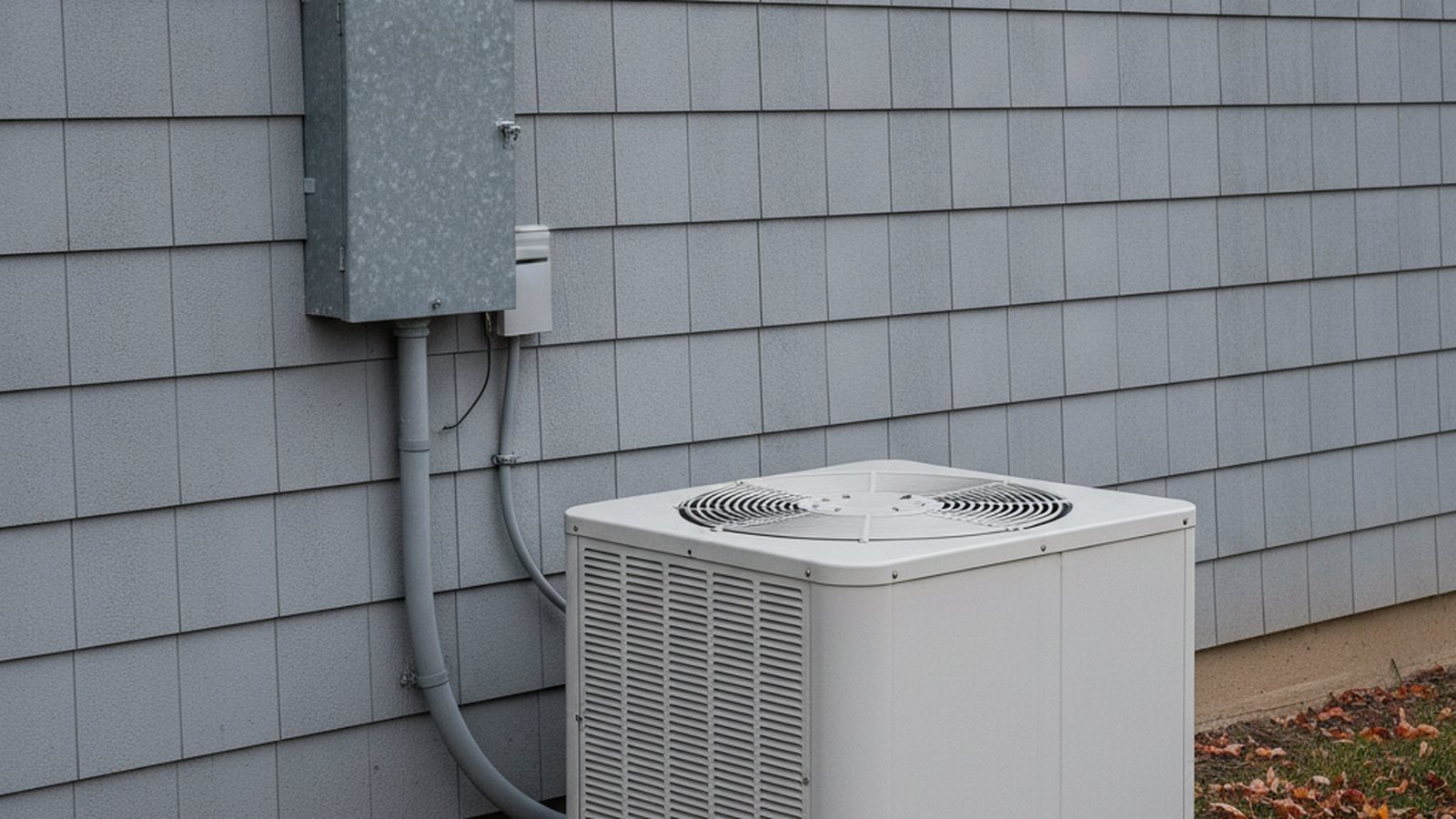
Natural Resources Canada advises that the power to the central unit should be shut off when the cooling season ends. It explains that most central air conditioners have a small electric heater on the compressor to keep refrigerant out of the lubricating oil, and that, to prevent damage to the compressor, you should turn the power back on a day or two before you need to operate the air conditioner.
That last point is the one most often forgotten. If you switch the outdoor unit off for winter, make a note to restore power a day or two before you first need cooling in spring, rather than switching it on and calling for cooling the same afternoon. Equipment varies, so check your owner's manual; some manufacturers give their own guidance on the crankcase heater. If you are unsure which breaker or disconnect serves the air conditioner, ask during your next service visit rather than guessing.
Step 4: To cover or not to cover
Covering the outdoor unit is one of the most debated steps. The unit is built to sit outside year-round, and a tight, non-breathable wrap around the sides can trap moisture and give rodents a sheltered place to nest. If you want to keep leaves and ice off the top, a breathable cover over the top panel only is the more common approach.
The right answer depends on your equipment, so follow the manufacturer's instructions. Whatever you choose, make sure any cover comes off before the system runs again, since running with a cover on restricts airflow.
Step 5: Keep the shared filter and drain in mind
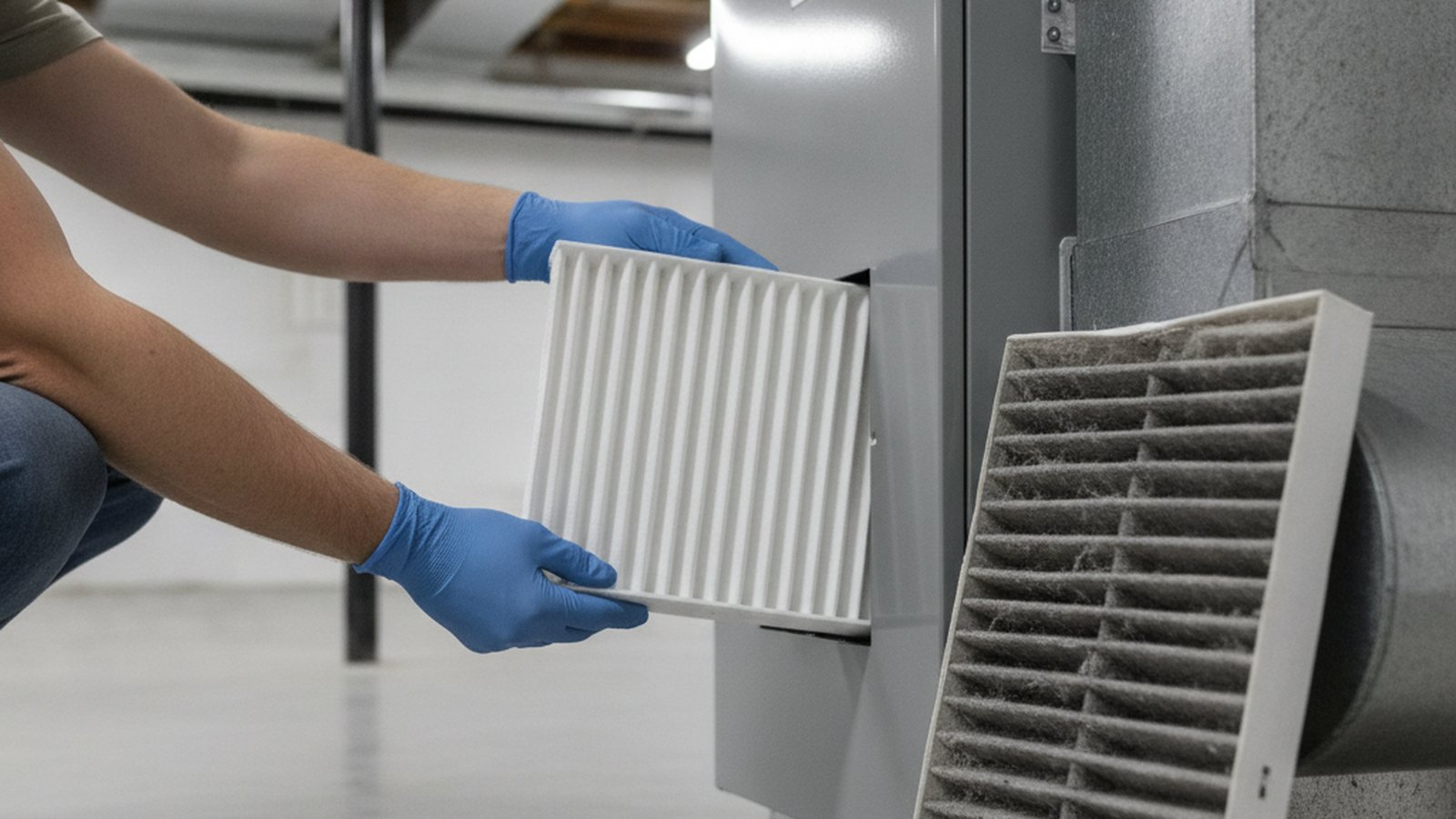
Because the furnace and air conditioner share a blower and filter, the filter keeps working all winter. A clogged filter restricts airflow through the furnace now and through the cooling coil later. Check it regularly through the heating season and replace it with the correct size, following the airflow arrow.
Natural Resources Canada's maintenance guide also recommends checking the condensate drain in your central air conditioner, furnace and/or heat pump, since a plugged drain can cause water damage and affect indoor humidity. If you notice water around the furnace or a drain line that has not been flowing, have it looked at before it becomes a leak.
When to book air conditioner maintenance
Fall is the time for heating. The same Natural Resources Canada guide suggests you plan your cooling system maintenance in the spring and your heating system check-up in the fall. That means the most useful thing to book right now is your furnace maintenance, with the air conditioner's tune-up scheduled for spring.
A spring visit is the time to check the parts a homeowner should not handle: electrical connections, the capacitor and contactor, refrigerant-side performance, coil condition, the condensate drain and the system's overall cooling output. If you noticed weak cooling, short cycling, ice on the lines or unusual noise this past summer, write it down now so the technician knows where to start.
A local example
Picture a home near Chestermere Lake with an outdoor unit on the north side, where fall winds pile leaves against the fence and the unit. In late September, the homeowner switches cooling off at the thermostat, rakes the leaves back, trims the shrub that had grown within reach of the coil, and follows the manual's guidance on the outdoor disconnect. A reminder goes on the calendar for May: restore power a day or two ahead, remove any top cover, and book the air conditioner maintenance visit before the first warm week.
Plan your next maintenance visit with Infinite Heating
Infinite Heating is a licensed and insured HVAC team serving Chestermere and nearby communities since 2022. We can help with fall furnace maintenance now and air conditioner maintenance before the cooling season, and answer questions about your specific equipment along the way.
Learn more about air conditioner maintenance in Chestermere, or contact us to plan your next visit.
This general information does not replace your equipment manufacturer's instructions or an on-site assessment by a qualified HVAC professional.